
Reasons Fiber Splices Fail After Installation
Focus Keyword: Reasons Fiber Splices Fail After Installation
If you’re dealing with signal loss, network downtime, or unexplained drops in optical performance, the culprit could be closer than you think. One of the most overlooked causes of fiber optic network issues is splice failure — and understanding the reasons fiber splices fail after installation can save you thousands of dollars in troubleshooting costs and downtime.
In this guide, we break down the most common causes of fiber splice failure, how to identify them, and what you can do to prevent them.
Table of Contents
- What Is a Fiber Splice?
- Why Fiber Splice Failures Matter
- Top Reasons Fiber Splices Fail After Installation
- How to Detect Fiber Splice Failures
- How to Prevent Fiber Splice Failures
- When to Call a Professional
- Conclusion
What Is a Fiber Splice?
A fiber splice is a permanent joint between two fiber optic cables. Unlike connectors, which can be plugged and unplugged, splices are designed to be fixed connections that carry optical signals with minimal loss. There are two main types:
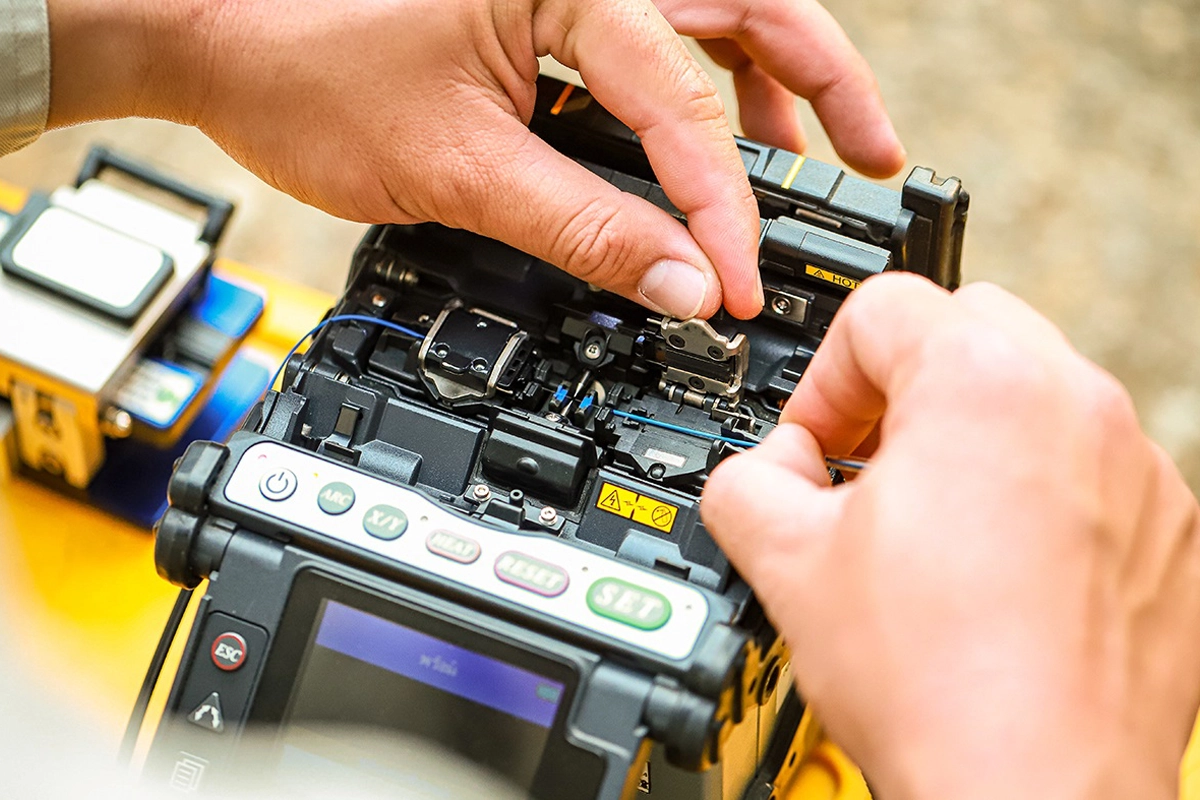
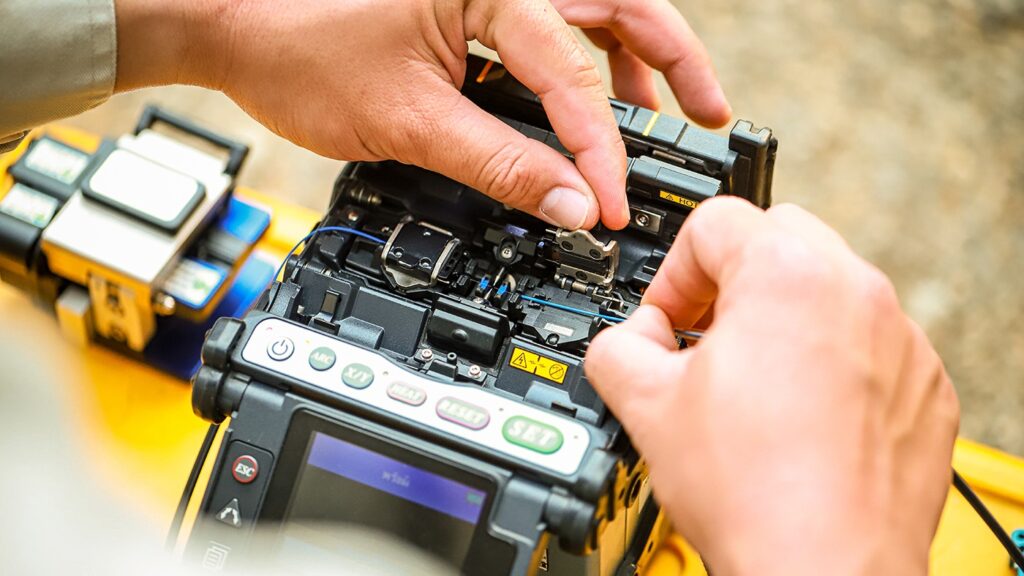
- Fusion splices — The fibers are melted together using an electric arc. This method offers the lowest signal loss and is most commonly used in telecommunications.
- Mechanical splices — The fibers are aligned and held in place using a mechanical fixture. These are quicker to install but tend to have slightly higher signal loss.
Both types can fail over time, and recognizing the early reasons fiber splices fail after installation is key to maintaining a healthy fiber network.
Why Fiber Splice Failures Matter
Fiber optic networks are the backbone of modern communications — from internet services to hospital data systems to industrial control networks. A single failed splice can:
- Cause complete signal interruption on a fiber run
- Degrade network speed and throughput
- Create intermittent connectivity issues that are difficult to diagnose
- Result in costly emergency repairs and extended downtime
According to industry data, splice-related failures account for a significant portion of fiber optic network outages. Understanding why they fail is the first step toward preventing them. Learn more about fiber optic standards from the Fiber Optic Association (FOA).
Top Reasons Fiber Splices Fail After Installation
1. Poor Cleave Quality
Before a fusion splice is made, each fiber end must be cleaved (cut) at a precise 90-degree angle. A poor cleave — one that is angled, chipped, or uneven — means the two fiber ends won’t align properly when fused. This leads to:
- High insertion loss
- Weak mechanical bond
- Eventual splice failure under stress or temperature changes
Always inspect cleave quality under magnification before splicing. A good cleave should be flat, smooth, and perpendicular to the fiber axis.
2. Contamination and Dirt on Fiber Ends
Dust, oil, moisture, and other contaminants on fiber end faces are among the leading reasons fiber splices fail after installation. Even microscopic particles can:
- Create voids in the fusion joint
- Increase optical loss significantly
- Cause the splice to crack or delaminate over time
Best practice: Always clean fiber ends with lint-free wipes and 99% isopropyl alcohol immediately before cleaving and splicing. Never touch the fiber end face.
3. Improper Fusion Parameters
Modern fusion splicers allow technicians to adjust arc power, arc duration, and fiber overlap. If these parameters are not calibrated correctly for the fiber type being spliced, the result can be:
- Under-fusion (fibers not fully melted together, creating a weak joint)
- Over-fusion (fibers distorted or bubbled, increasing signal loss)
Always use the splicer’s auto-mode or fiber-specific splice programs, and regularly recalibrate the machine according to the manufacturer’s recommendations.
4. Mechanical Stress and Bending
Even a perfectly executed splice can fail if it is subjected to excessive mechanical stress after installation. Common stress-related causes include:
- Tight bends near the splice point that exceed the fiber’s minimum bend radius
- Tension from cable pulling or improper routing
- Pinching inside a splice enclosure due to improper storage of the fiber loop
During installation, always leave adequate slack loops inside splice enclosures and ensure fibers are routed gently with no sharp bends.
5. Environmental Exposure (Moisture and Temperature)
Fiber splices are often deployed outdoors, underground, or in industrial environments where they face harsh conditions. Moisture ingress is one of the most destructive forces acting on a fiber splice because:
- Water can wick along the fiber, degrading the splice point
- Freeze-thaw cycles cause physical stress on the splice
- High humidity can corrode splice components and degrade optical performance
Always use weatherproof splice enclosures rated for the installation environment. Properly seal all entry points with waterproof gels or heat-shrink tubing.
6. Failure of the Protective Heat Shrink Sleeve
After fusion splicing, the splice point is protected by a heat shrink sleeve (also called a splice protector). This sleeve provides mechanical support and protects the fragile fused joint. Sleeve failures occur when:
- The sleeve is not fully heated and shrunk during installation
- The sleeve is the wrong size for the fiber type
- The sleeve is damaged or cracked during cable routing
Inspect every heat shrink sleeve after application to confirm it is fully shrunk, centered over the splice, and shows no signs of cracking or bubbling.
7. Vibration in Industrial Environments
In environments with machinery, heavy equipment, or traffic — such as factories, roadside installations, or railway networks — constant vibration can gradually weaken a splice joint. Over time, micro-cracks can develop, leading to intermittent or complete signal failure.
Use vibration-resistant splice enclosures and secure cables properly to minimize vibration transmission to the splice.
8. Poor Splice Tray Management
Inside a splice enclosure, fibers are organized using splice trays. Improper tray management is a surprisingly common reason fiber splices fail, including:
- Fibers crossing over each other, creating pressure points
- Loops stored too tightly, exceeding the fiber’s minimum bend radius
- Splice protectors not properly seated in tray holders
Take time to organize fibers neatly and confirm all splice protectors are correctly seated before closing the enclosure.
9. Aging and Material Degradation
Like all materials, the components used in fiber splicing — including the splice protector, enclosure seals, and even the fiber coating itself — degrade over time. In outdoor or UV-exposed installations, UV radiation can break down polymer coatings. In high-temperature environments, seals can harden and crack.
Plan for periodic inspection of aging splice closures and replace components that show signs of degradation before they cause network failures.
10. Inadequate OTDR Testing After Installation
One of the most preventable reasons fiber splices fail after installation is the failure to properly verify splice quality using an Optical Time Domain Reflectometer (OTDR) immediately after splicing. An OTDR can:
- Measure insertion loss at each splice point
- Identify reflections that indicate poor cleave quality or contamination
- Detect splice points with excessive loss that are likely to fail under field conditions
Never assume a splice is good based on the splicer’s estimated loss alone. Always confirm with an OTDR test from both ends of the fiber.
How to Detect Fiber Splice Failures
Detecting splice failures early prevents small problems from becoming network outages. Key diagnostic tools and methods include:
- OTDR (Optical Time Domain Reflectometer): Sends a light pulse down the fiber and measures reflections to pinpoint the location and severity of a splice problem.
- Optical Power Meter: Measures total signal loss across a fiber run to identify if loss is above acceptable thresholds.
- Visual Fault Locator (VFL): Injects red visible light into the fiber; light leaking at a splice point indicates a failure.
- Network Monitoring Systems: Automated alerts when signal levels degrade below a set threshold.
For guidance on testing standards, refer to the TIA-568 fiber optic testing standard.
How to Prevent Fiber Splice Failures
Prevention is always more cost-effective than repair. Here are the most important steps to reduce splice failure rates:
- Train technicians thoroughly on proper cleaving, cleaning, and fusion techniques.
- Use high-quality, well-maintained fusion splicers calibrated for the fiber type.
- Always clean fiber ends before cleaving and splicing.
- Select splice enclosures rated for the specific environment (temperature, moisture, UV exposure).
- Perform OTDR testing immediately after installation and document results.
- Schedule periodic inspections of outdoor and underground splice closures.
- Follow manufacturer specifications for bend radius, splice protector size, and enclosure sealing.
When to Call a Professional
While many splice failures can be identified and repaired by trained in-house technicians, some situations call for professional fiber optic specialists:
- When OTDR testing reveals multiple high-loss splices across a network
- When a splice enclosure shows signs of severe moisture ingress or physical damage
- When intermittent failures cannot be localized with available tools
- When working with high-fiber-count cables or specialty fiber types (e.g., multimode OM5, bend-insensitive fiber)
Professional fiber optic contractors have access to advanced testing equipment and factory-trained expertise to diagnose and resolve complex splice failures efficiently.
Conclusion
Understanding the reasons fiber splices fail after installation is essential knowledge for anyone responsible for maintaining a fiber optic network. From poor cleave quality and contamination to environmental exposure and inadequate testing, most splice failures are preventable with the right training, tools, and processes.
By implementing proper installation practices, investing in quality materials, and performing thorough post-installation testing, you can significantly extend the life of your fiber splices and keep your network running reliably for years to come.
Have questions about fiber splice failures or need help diagnosing a network issue? Contact our fiber optic specialists today.
Related posts:
- How to Use an OTDR to Test Fiber Optic Splices
- Why OTDR Testing Is Important After Fiber Installation
- Top 10 Fiber Optic Installation Mistakes and How to Avoid Them
Leave a Reply